
Dog Sledding
Sit wrapped in a sled behind a working husky team, with fika by an open fire halfway.
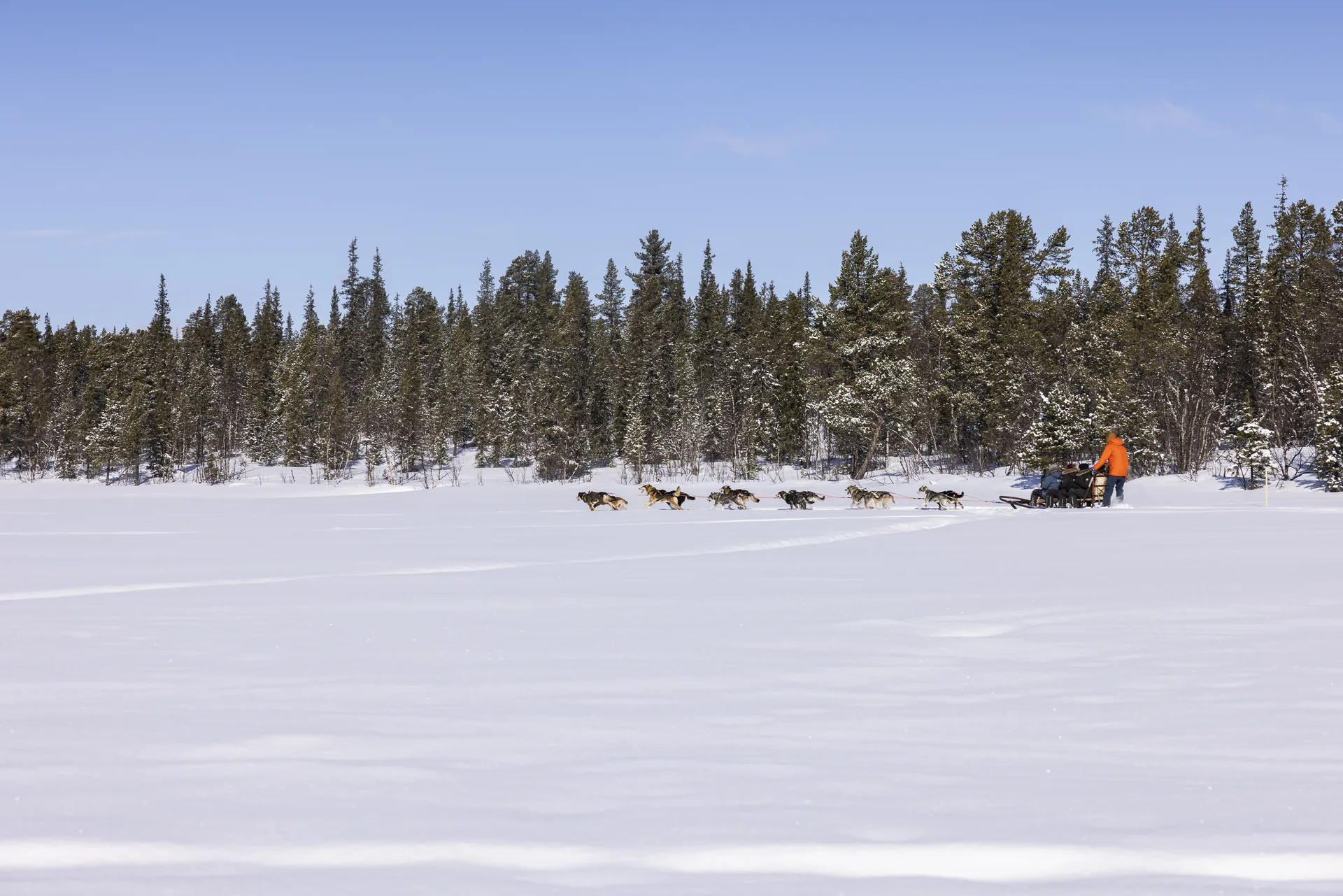
You hear the kennel long before you see it. Forty dogs realise a sled is being harnessed and the noise is enormous - howling, barking, bodies bouncing on their lines, pure impatience. Then the musher pulls the anchor, and within two seconds it stops completely. Total silence. That switch, from chaos to nothing, is the moment guests talk about afterwards.
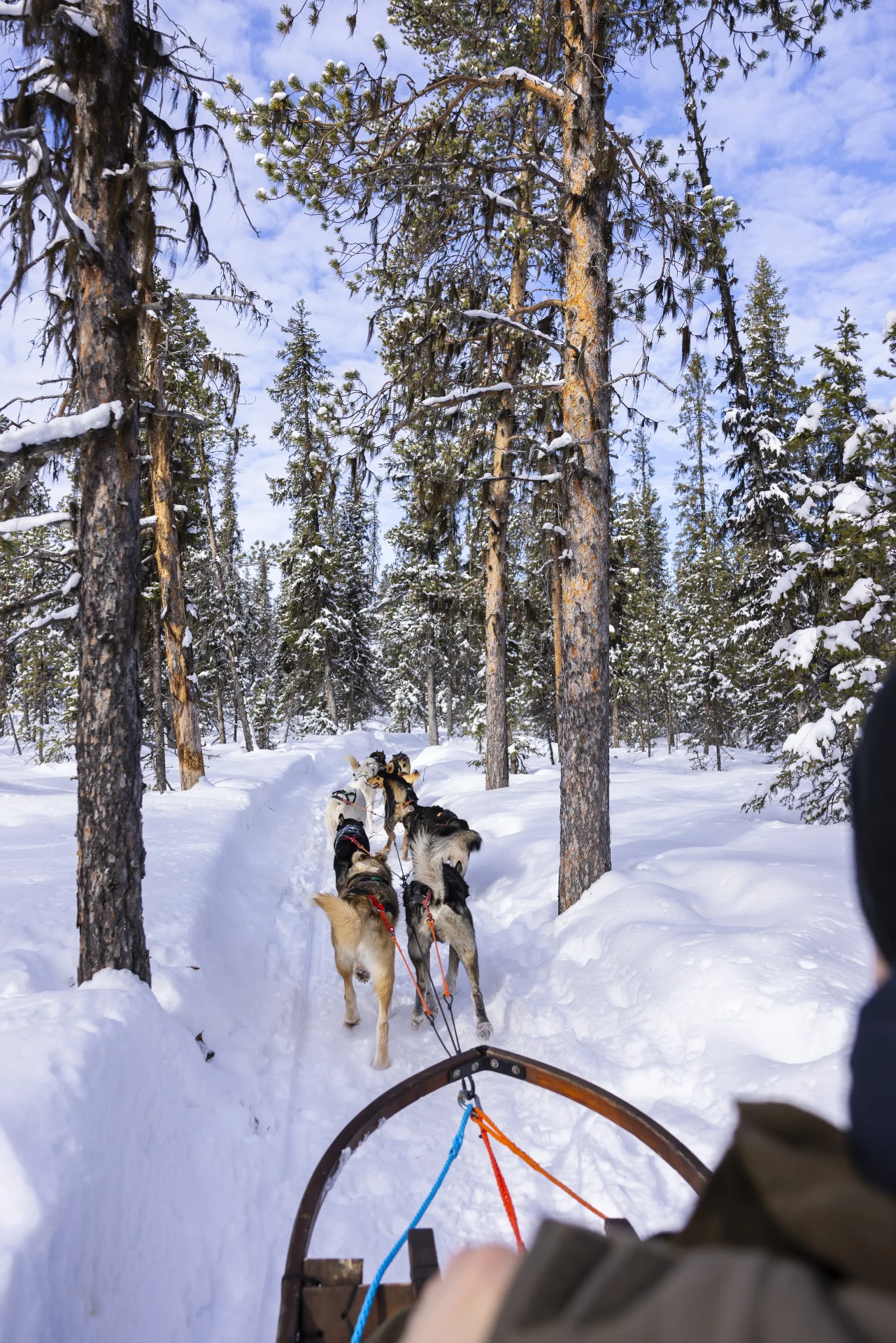
The trail from the sled, and the moment most guests remember.
After that it is just the runners. A dry hiss over packed snow, the soft double beat of forty paws, and the dogs breathing in rhythm. You are sitting low, wrapped in a reindeer hide, so the forest goes past at eye level. Snow drops off the branches. The cold finds the one centimetre of cheek you left uncovered. You stop thinking about anything at all, which for most people is the first time that has happened in months.
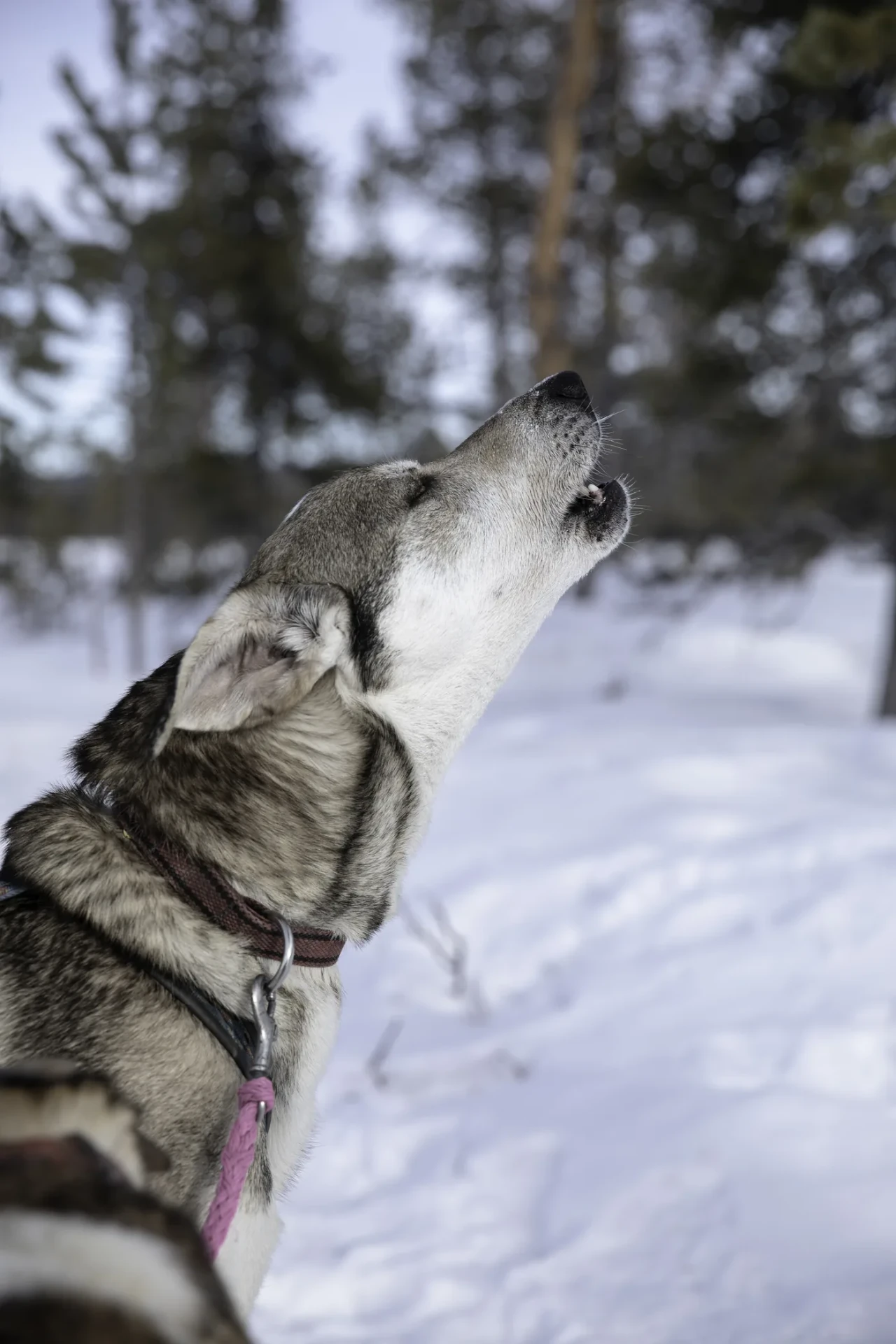
Dogs that live for this
The noise before the anchor comes up is astonishing, and it stops the instant you move. These are working animals, well fed, well rested and genuinely happy to run.
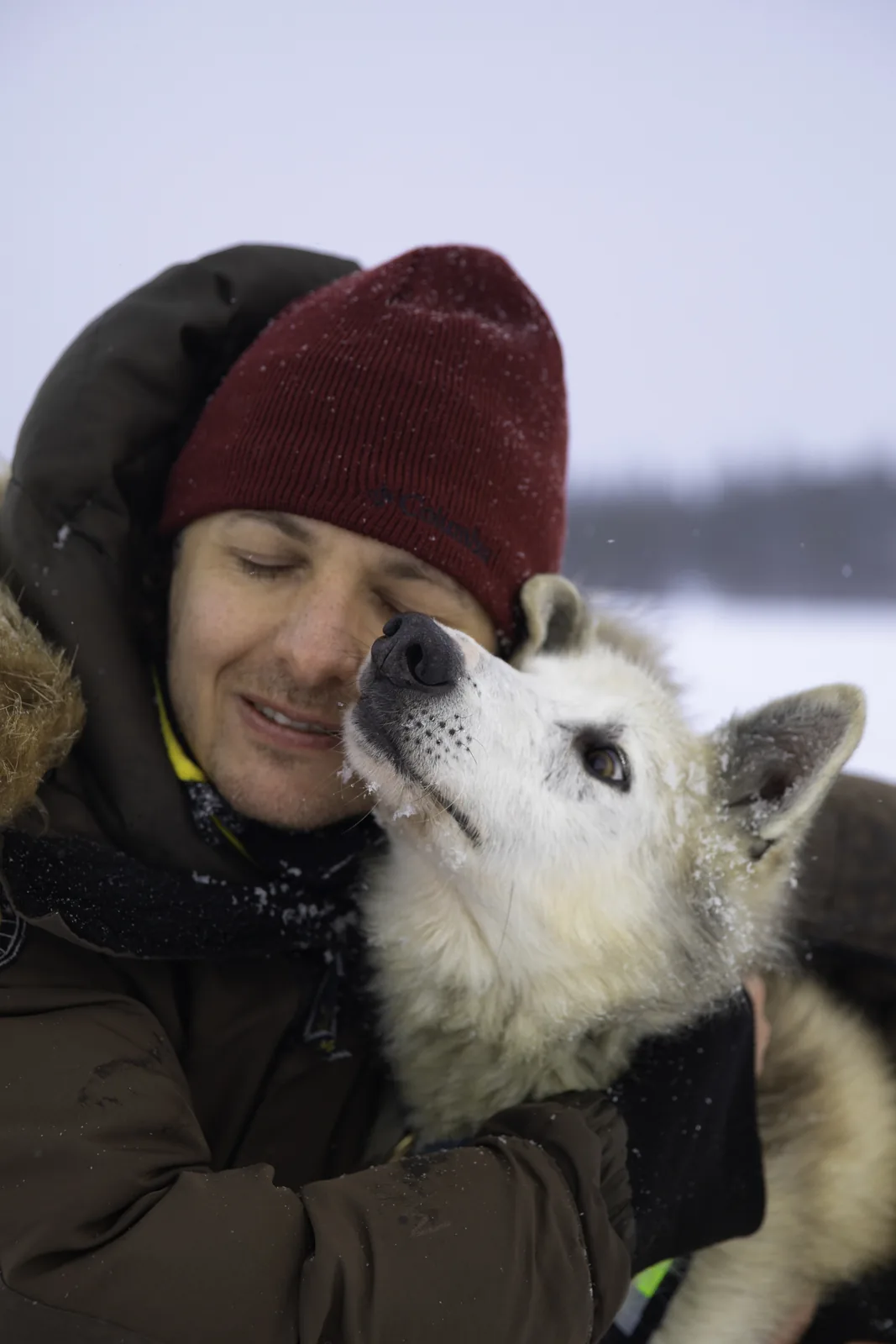
Halfway out the team stops and the fire gets going, in a lavvu or out in the open. Woodsmoke, hot coffee, something sweet, mittens steaming on a log. The dogs roll in the snow to cool down and then come over to be scratched behind the ears. That hour by the fire, with a husky leaning its full weight against your leg, is what people take home.
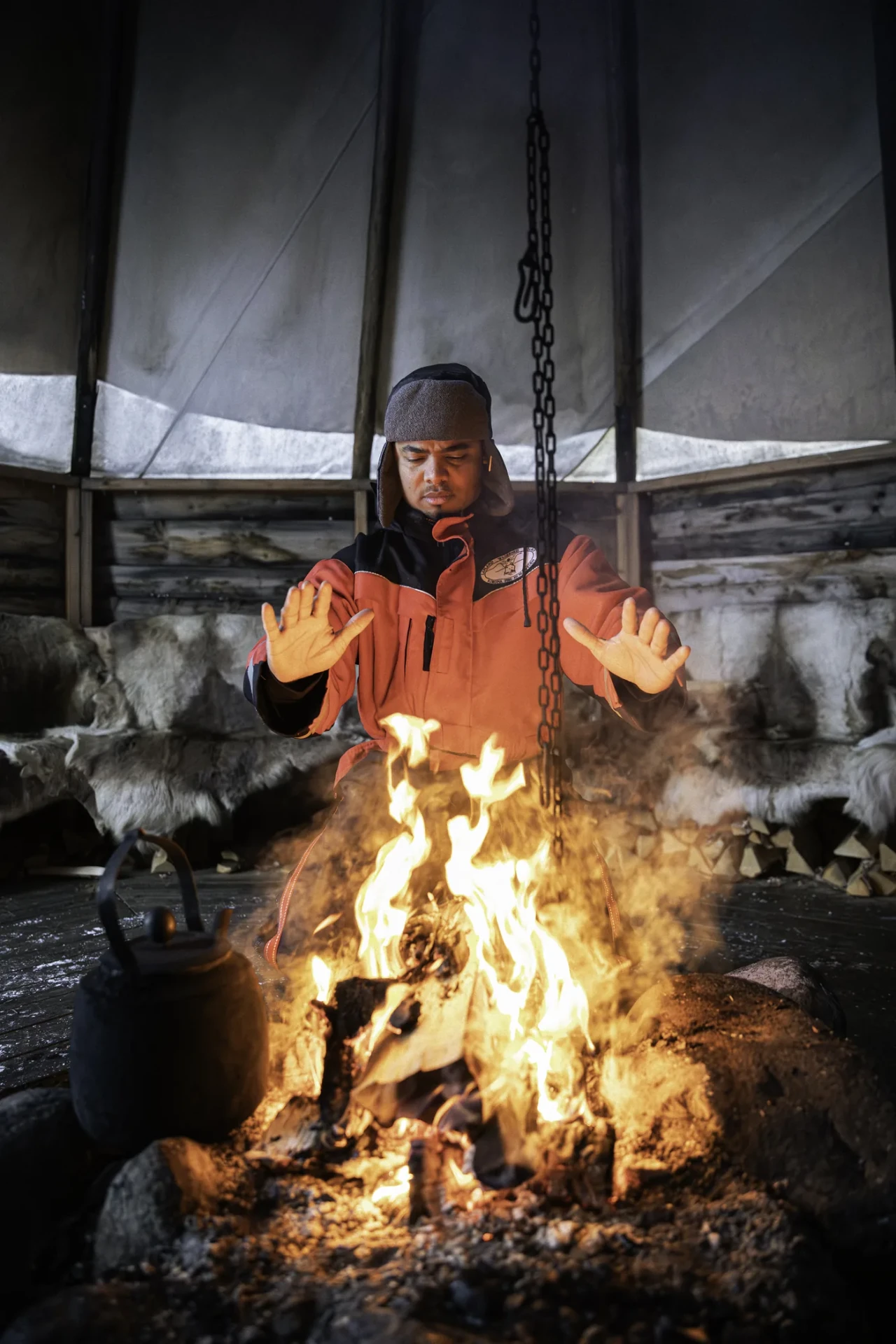
Fika halfway out: an open fire in the lavvu, or outdoors around the flames.
Why our dog sledding is different
You sit, you do not drive. That is a deliberate choice. It means a nervous first-timer, a grandparent and a seven-year-old can all do the same tour without a briefing about brakes, and it means you spend the ride looking at the forest instead of at your feet. The mushers are professionals who run these teams all winter.
The dogs come first, always. They are working animals in excellent condition, they run in weather that suits them, and the kennel is happy to answer any question you have about how they live year round. We keep groups small so there is real time at the kennel - not a queue for a photo, but twenty unhurried minutes in the snow with the team.
Dog sledding in Swedish Lapland is one of the oldest ways to move through this landscape, and still one of the best. You do not drive the sled - you sit in it, wrapped up warm, while an experienced musher drives the team. No fitness level, licence or previous experience is needed.
Once on the trail the noise falls away almost instantly. It is the hiss of the runners, the dogs breathing, and forest closing in on either side. Halfway out the team stops and we make a Swedish fika in a lavvu with an open fire, or outdoors around the fire itself: coffee or tea and something sweet, with the dogs resting in the snow beside you.
There is time to meet the dogs properly. They are social animals that genuinely enjoy people, and your musher will tell you how they live, how a team works together and how they are looked after through the year.
- A welcome at the kennel, the harnessing of the team, and that extraordinary noise before the anchor comes up
- A guided run through forest and open fell with you seated and wrapped in a reindeer hide, driven by an experienced musher
- A stop halfway for Swedish fika in a lavvu with an open fire, or outdoors around the fire - coffee or tea and something sweet
- Unhurried time with the dogs before and after the run, with no queue for a photograph
- Straight answers from the mushers about how the dogs are fed, trained and cared for through the year
- Return transfers from your hotel in Kiruna, and the full winter clothing set to wear
- Duration
- Approx. 3 to 4 hours, including fika
- Season
- December to March
- Included in the Feel Good Week
Dog Sledding in Kiruna - your questions answered
No, and that is deliberate. You sit in the sled wrapped in a reindeer hide while an experienced musher drives the team, so there is no briefing about brakes and no chance of ending up in a snowbank. It means everyone from a seven-year-old to a grandparent can share the same ride, and it leaves you free to watch the forest instead of your feet. If you specifically want to drive a team yourself, tell us and we will look at arranging it separately.
Sitting still in a moving sled is the coldest activity of the week, because of the wind chill on top of a temperature that can be minus twenty. You wear our full winter clothing set - insulated overall, boots, mittens and hat - over your own thermal base layers, plus a buff or scarf over your face. A reindeer hide goes over your lap in the sled. The fika fire halfway is there for exactly this reason.
It is a fair question and we would rather you asked it. These are working huskies bred and conditioned to run, kept by professional mushers who live with them year round. Teams run distances suited to their condition and the temperature, tours are cancelled in weather that does not suit them, and they rest and get water at the halfway stop. You will see the kennel yourself, and the mushers are happy to answer anything about feeding, veterinary care and what the dogs do in summer.
Yes. Because guests are passengers, dog sledding is one of the most family-friendly things we do, and small children usually ride tucked in with a parent. The kennel visit is normally the highlight for them. Tell us the ages when you register your interest so the mushers can plan sled loading and hides in advance.
The sled ride is seated and low, and the trail is groomed, but it is not perfectly smooth - there is jolting over bumps that can be uncomfortable with an acute back problem. Getting in and out of a low sled also takes a little flexibility, though the mushers help. Tell us in advance what the issue is and we will be honest about whether it will work, and arrange a calmer alternative if not.
Snow and cold are not bad weather here, and tours run in both. We only postpone for genuine extremes: heavy storm winds, or temperatures low enough to be unsafe for the dogs. If that happens on your day, we move the activity to another day of your week, which is one of the practical advantages of a four-night package over a single booked tour.
This experience is included in The Feel Good Week, our four-night Kiruna package, along with every transfer and the full winter clothing set. Planning details such as flights, packing and weather are on the practical information page.
Every experience in the Feel Good Week

The Arctic is waiting.
Four nights in Kiruna, arranged end to end. You only book your flights.
See dates & availability