Sámi Culture & Reindeer
A visit to the Márkanbáiki open-air museum in Jukkasjärvi, and reindeer feeding up close.
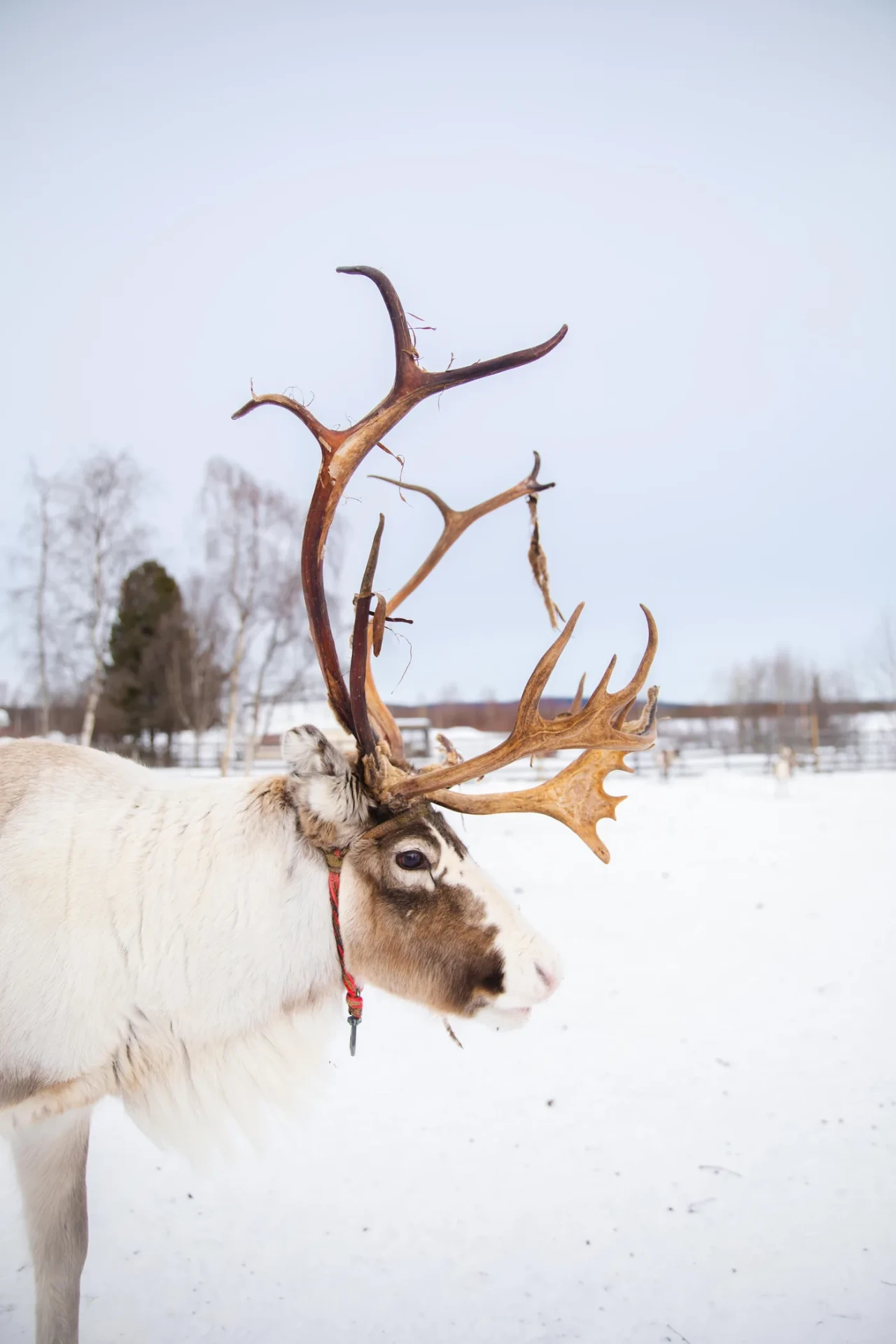
A reindeer takes food from your open palm with surprising delicacy - a warm huff of breath, a nudge, and it is gone. They are smaller than people expect and much calmer, as long as you move slowly. Ten minutes in, you stop trying to photograph them and just stand in the snow while the herd works around you.
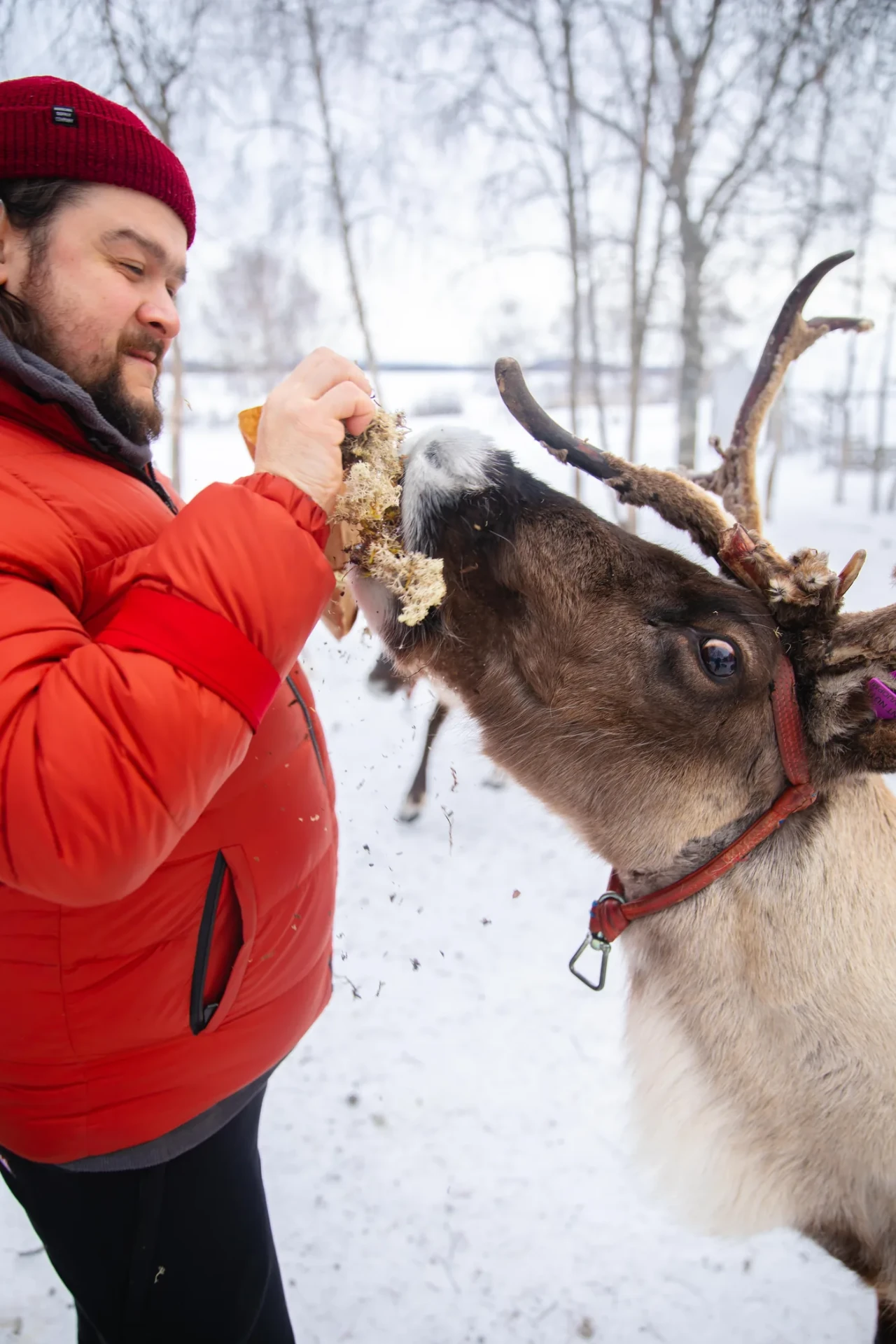
Feeding the herd by hand
Reindeer are calmer than people expect around anyone who moves slowly. You stand among them, and they come to you.
Márkanbáiki is quiet in winter. Turf huts and timber storehouses on stilts sit under deep snow, and inside the lavvu there is a fire, smoke going up through the vent, and somewhere to sit while you listen. What you hear is not a performance. It is how families followed the herds through the year, what the seasons are called and what each one demands, and how a herding life actually works now, with snowmobiles and GPS collars and land that keeps getting smaller.
Most guests arrive knowing almost nothing about the Sámi, which is exactly the point. You leave understanding that Sápmi is a place people live in rather than a heritage exhibit - and usually with a strong opinion about something you had never once thought about before lunch.
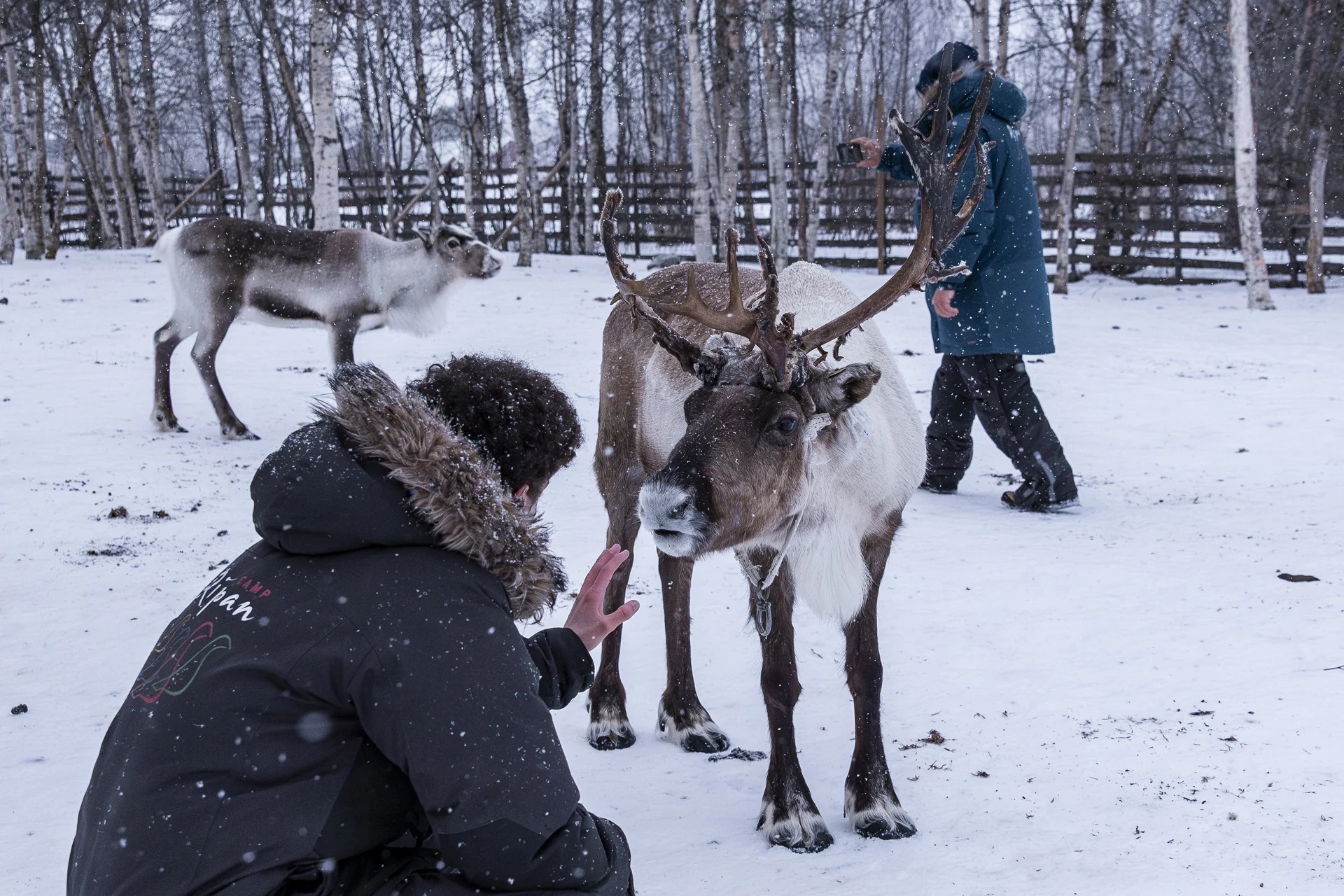
A hand held out in falling snow, and a reindeer deciding to come closer.
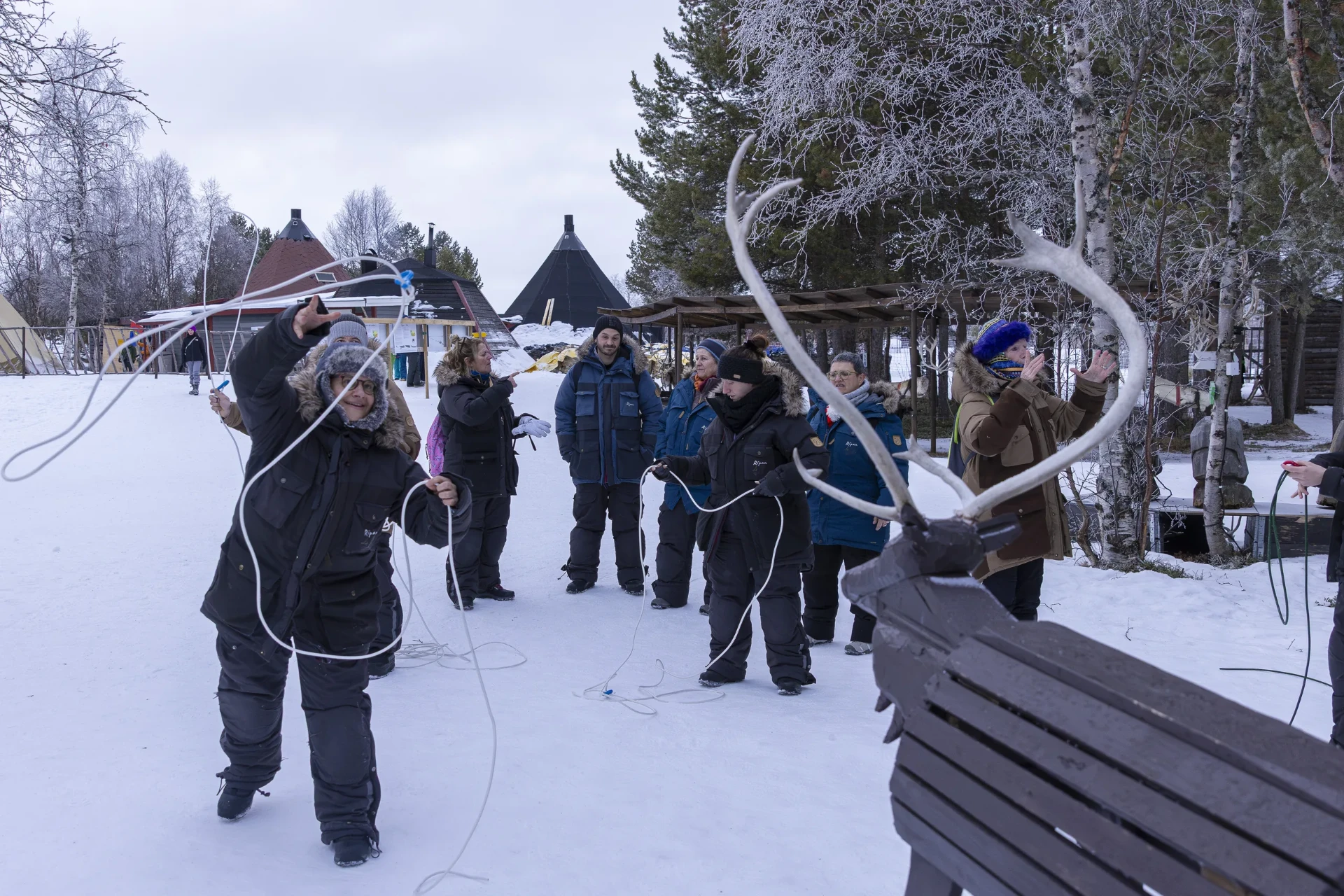
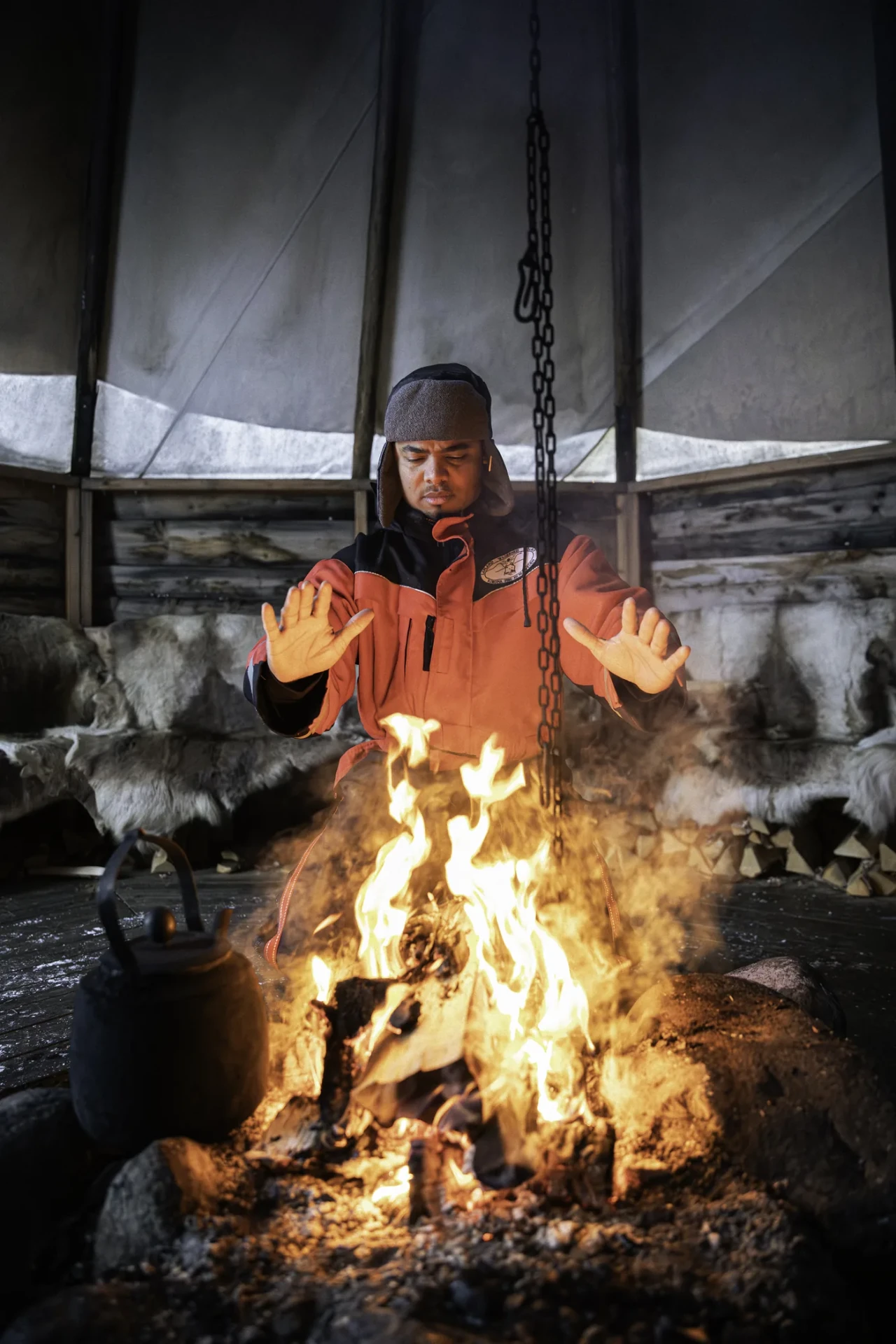
Lasso practice at the camp, and the fire inside the lavvu.
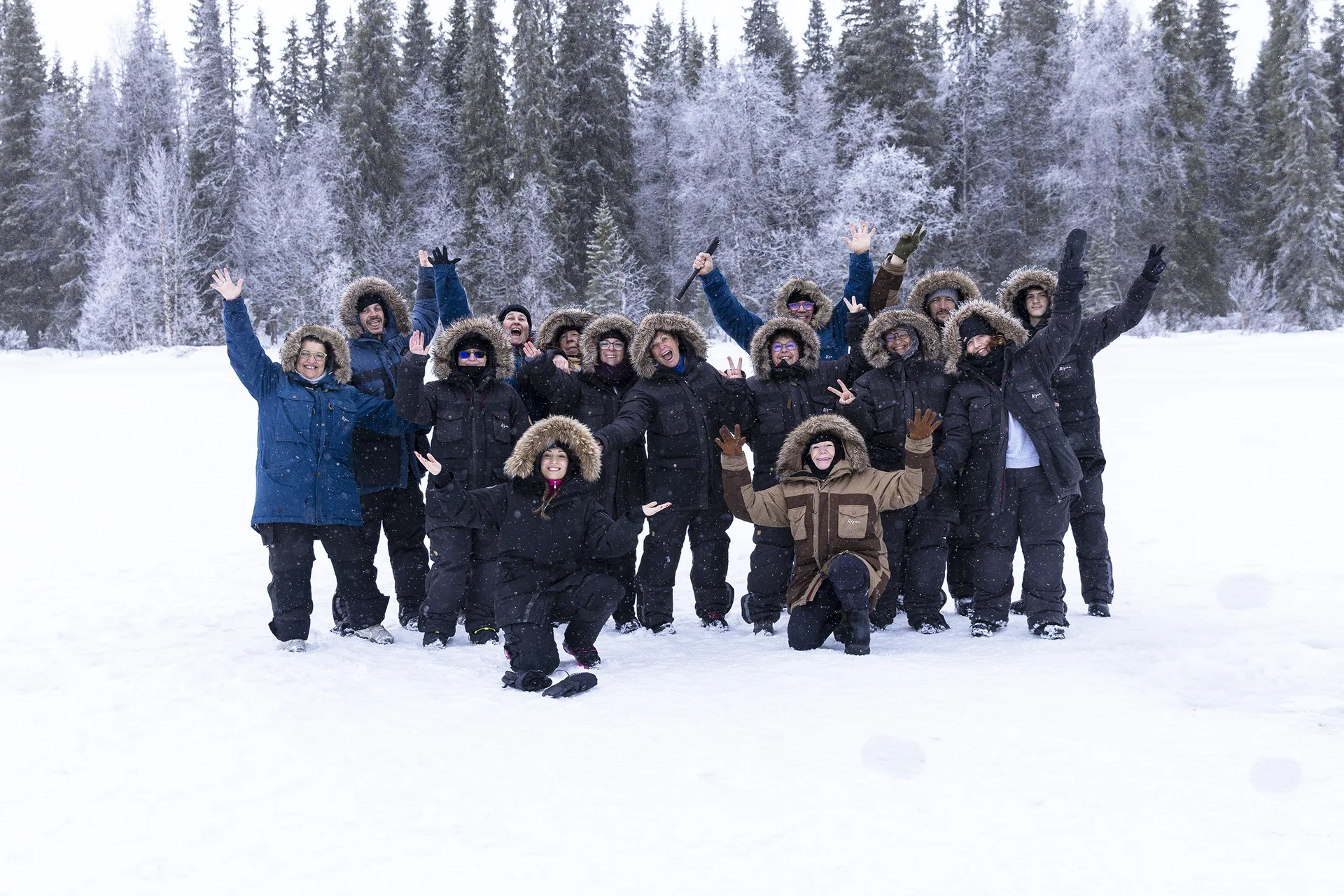
The end of the afternoon, somewhere between the enclosure and the minibus.
Why we visit the way we do
We keep this afternoon calm and honest. No costumed show, no invented ritual. You visit a real open-air museum in Jukkasjärvi with a guide who explains what the buildings were for, and you spend proper time with the reindeer rather than filing past them.
Small groups matter here more than anywhere else on the week. It means you can ask the awkward questions - about land rights, about tourism, about whether any of this is still viable - and get a straight answer instead of a script.
The Sámi are Europe's only recognised indigenous people, and Sápmi - their traditional homeland - stretches across the Arctic regions of Sweden, Norway, Finland and Russia. Kiruna sits within it, and reindeer herding is still a living, working tradition here rather than a museum piece.
We visit Márkanbáiki, the open-air museum in Jukkasjärvi, where the buildings, tools and dwellings show how Sámi families have lived and moved with the herds through the seasons. You learn about Sápmi, about Sámi culture and history, and about how that history is still being written today.
The part most guests remember is the reindeer. You feed them by hand, up close, and see how calm and curious they are around people who move slowly.
- Transport from your hotel in Kiruna to Jukkasjärvi, roughly 15 minutes each way
- A guided visit to the Márkanbáiki open-air museum, with turf huts, storehouses and tools explained
- An introduction to Sápmi, Sámi culture, the eight seasons and the herding year
- Feeding the reindeer by hand, up close, with time to stay among the herd
- A fire in the lavvu to sit by and warm up
- An open conversation about herding today, including land pressure, climate and tourism
- Duration
- Approx. 3 hours, afternoon
- Season
- December to March
- Included in the Feel Good Week
Sámi Culture & Reindeer in Kiruna - your questions answered
There is no costumed performance and no invented ceremony. You visit Márkanbáiki, a genuine open-air museum in Jukkasjärvi where the buildings and tools are the real thing, with a guide who explains what they were used for and how families moved with the herds. Reindeer herding is a living livelihood in this region, not a heritage display, and that includes the difficult modern parts - land pressure, climate, and tourism itself. Ask about them.
Yes, hand-feeding the reindeer is part of the visit and there is unhurried time for it. They are calm and curious around people who move slowly and quietly, so the advice is simply to keep your voice down and your hand flat. They will come to you. It is usually the part guests photograph most and remember longest.
It is one of the best afternoons of the week for children. The pace is calm, the walking is short and flat, there is a fire to sit by, and feeding an animal by hand beats any museum for a six-year-old. There is nothing frightening and nothing that requires standing still for long.
A little context helps: the Sámi are Europe's only recognised indigenous people, Sápmi spans northern Sweden, Norway, Finland and Russia, and the word Lapp is considered outdated - use Sámi. Ask before photographing people, as you would anywhere. And come with questions, because the visit is much better as a conversation than as a tour.
Roughly three hours including the fifteen-minute transfer each way from Kiruna. Most of it is outdoors, but at a standing and strolling pace rather than an exposed one, and there is a lavvu with a fire to warm up in. You wear the same winter clothing set as the rest of the week.
This experience is included in The Feel Good Week, our four-night Kiruna package, along with every transfer and the full winter clothing set. Planning details such as flights, packing and weather are on the practical information page.
Every experience in the Feel Good Week
The Arctic is waiting.
Four nights in Kiruna, arranged end to end. You only book your flights.
See dates & availability